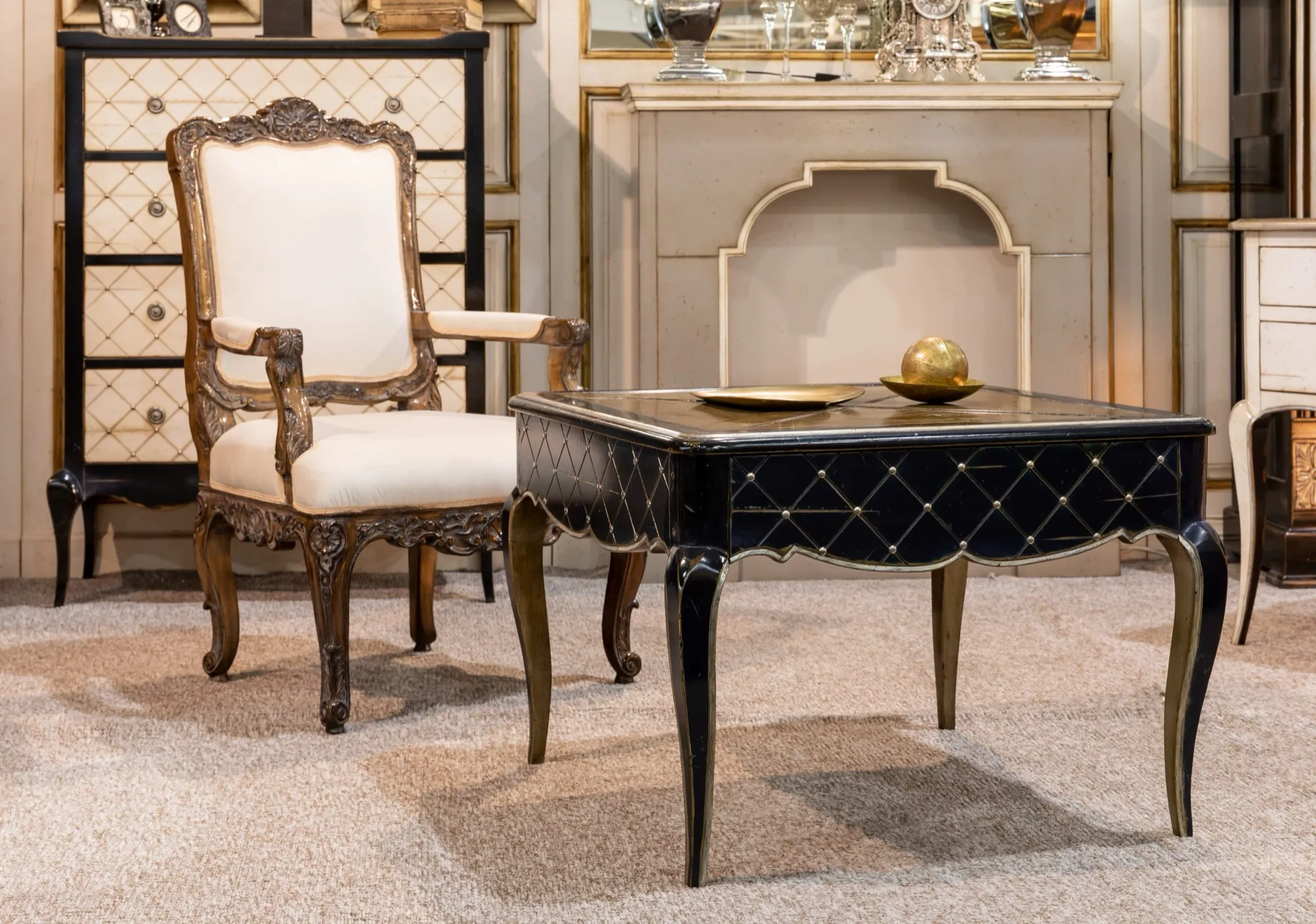
Six royal eras of France
Styles
I
Louis XIV
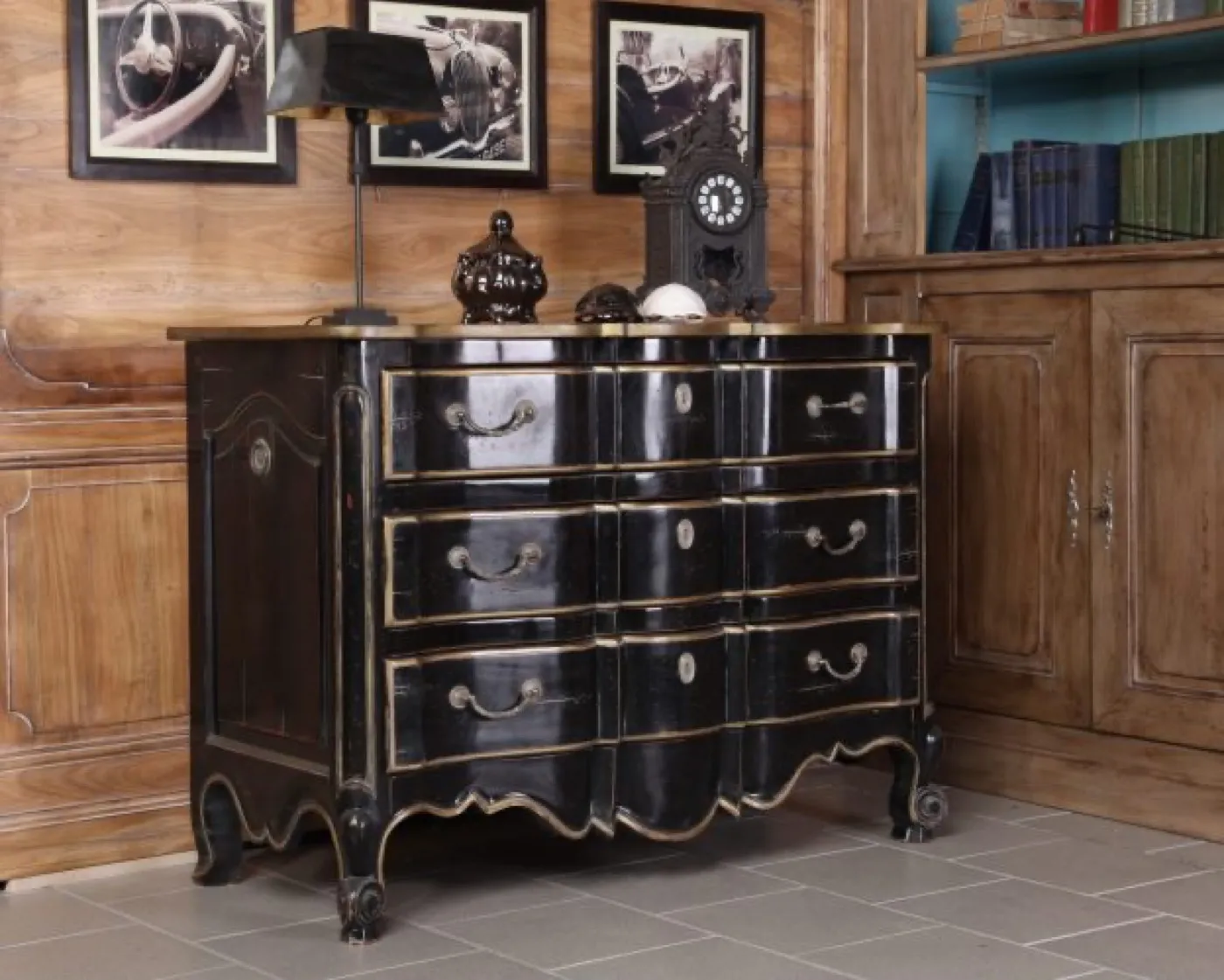
The Louis XIV style is defined by monumentality, echoes of Antiquity and a wealth of decoration: furniture is adorned with carving, marquetry and bronze hardware. Massive pieces are usually carved, while lighter, more refined ones are often polychrome. Gilding is used generously and fronts carry abundant ornament. Different woods are combined with inlays of tortoiseshell, pewter and leather, and strips of ivory frame the panels. Large turned wooden balls become a popular decorative element. Acanthus leaves, garlands and branches, festoons, lambrequins and scrolls are integral to the style. Floral motifs give way to abstract patterns, masks, heads of fauns and lions, and shells. Although the structure is still massive and rectangular forms dominate, a hint of curves gradually appears: legs bend, fronts round out and chair backs end in a semicircle.
II
Régence
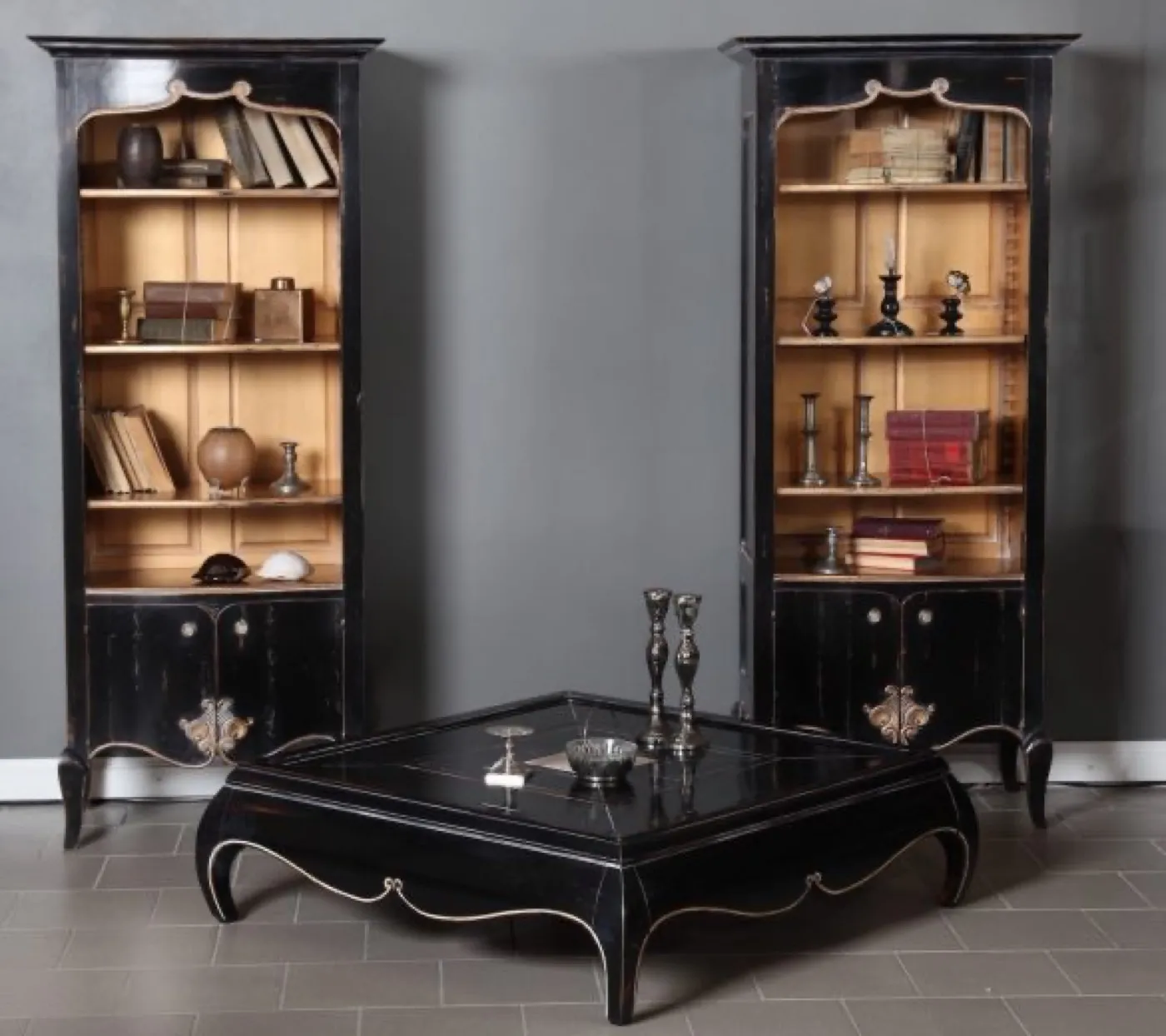
Régence furniture is more graceful; the pomp recedes and forms begin to bend. The curve becomes the dominant feature and device: chest fronts swell into bombé shapes and chair legs recall the “doe’s foot”. Elegance and comfort come to be valued over splendour. In a sense, Régence furniture stands on the threshold of modern furniture, since it stops being purely decorative and shows functionality and a desire for comfort. Rich carving is still used, now marked by symmetry and proportion. As a rule a single wood is used, and effects are achieved by combining different grain directions of the same material, which is how diamond patterns are made. Massive bronze mounts both adorn the furniture and protect its most vulnerable parts.
III
Louis XV
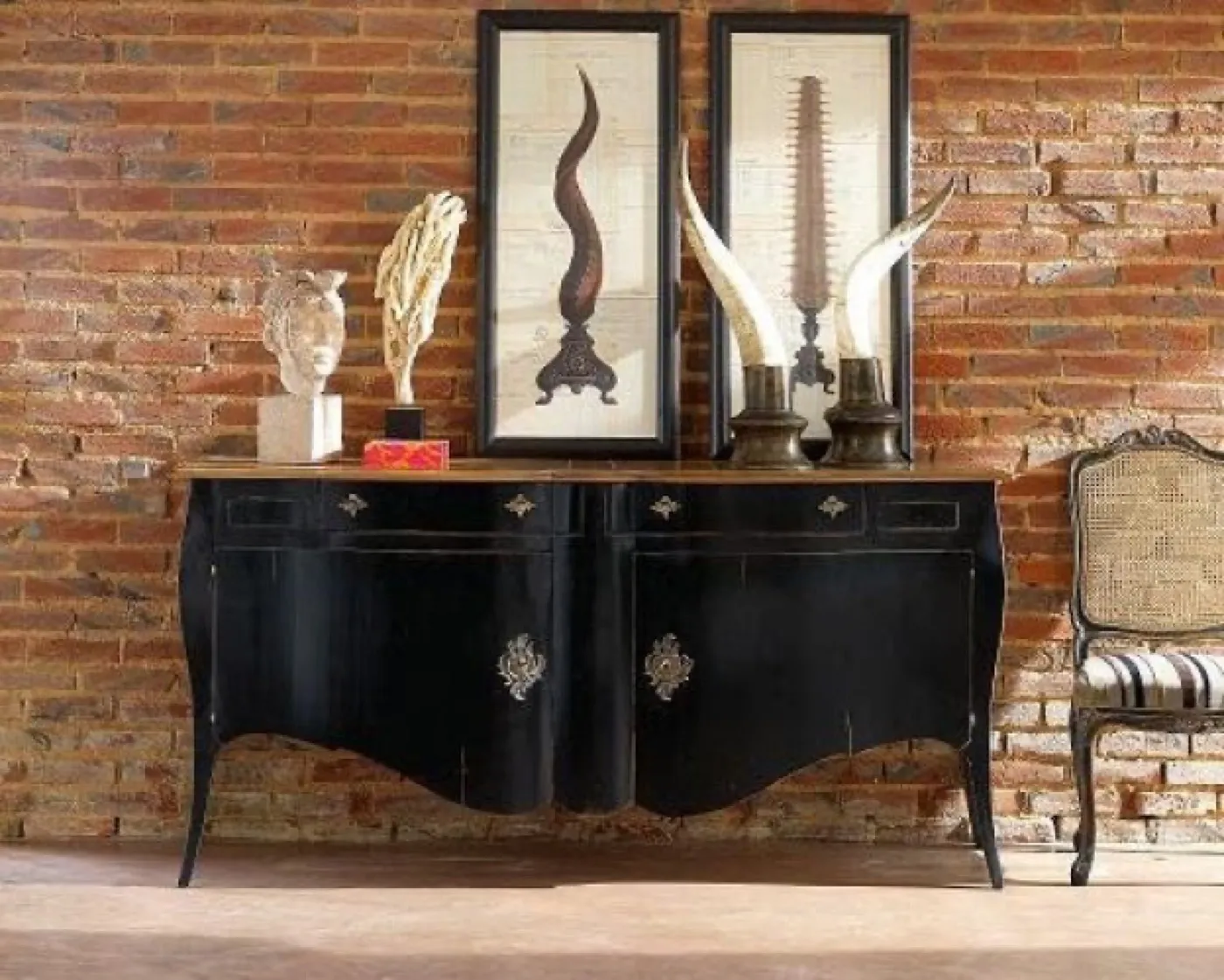
In this period the idea of style takes on its true meaning. The gallant, elegant and refined king is himself a model of style; he seeks neither grandeur nor scale, but refinement. The Louis XV style can be called a style of seduction, though it follows naturally from the Régence. Curved lines prevail and the curve is the principal device; form itself becomes decoration. The shell appears as a favourite motif. Cabinetmakers reach the height of their art, using rare and precious woods and obtaining the grain patterns they want by cutting along, across and diagonally to the fibre. New small pieces appear to meet society’s new needs: secretaires, ladies’ tables, card tables, occasional tables, bedside cabinets, corner cupboards and chests of drawers. They bring a sense of refinement and comfort to the prosperous daily life of the eighteenth century.
IV
Louis XVI
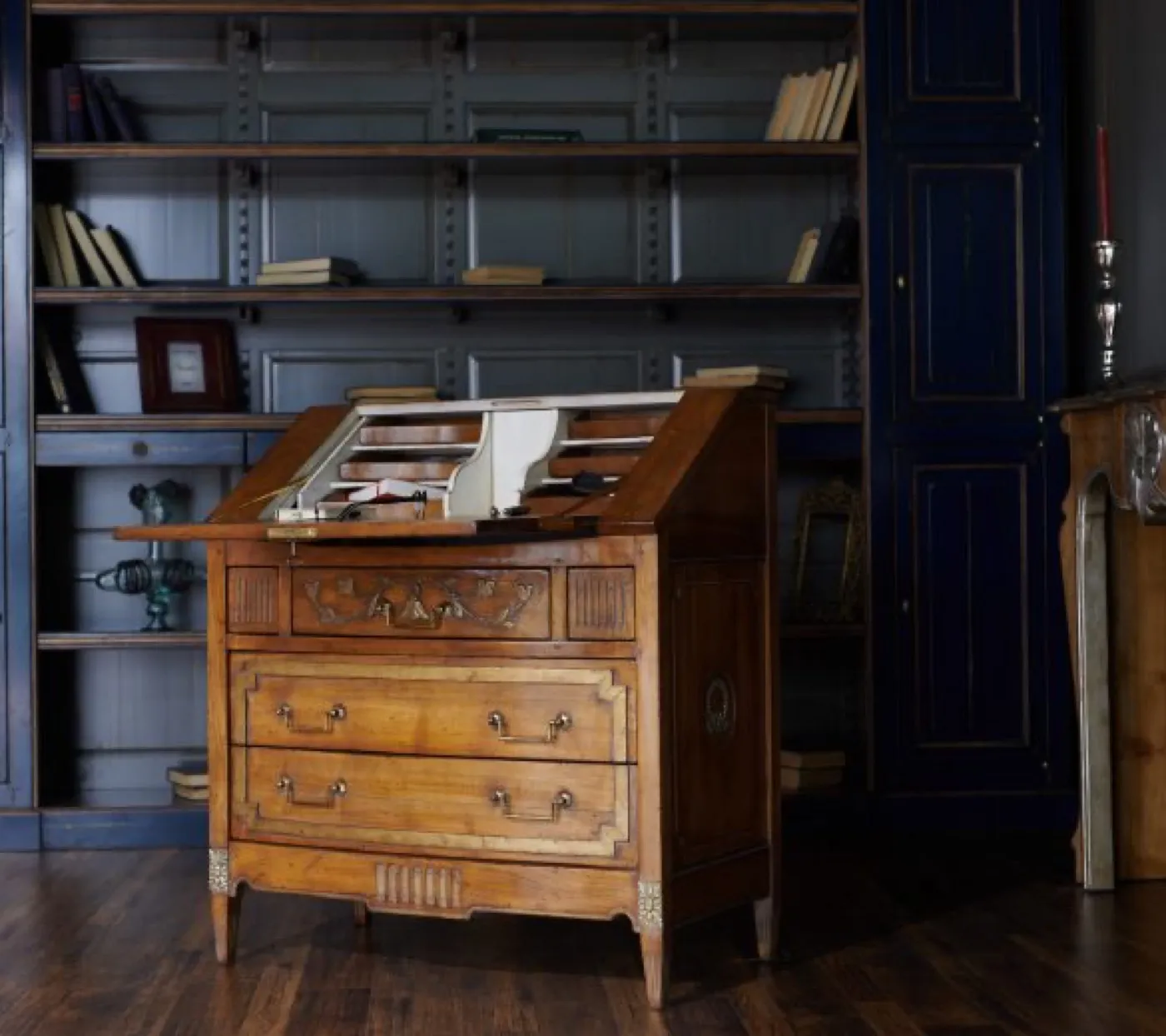
The main feature of this style is a return to simplicity. Decorative art becomes restrained, with no more room for excess. The discovery of the ruins of Pompeii may have influenced this turn. A fashion for all things “Greek” arrives, and in this setting the Louis XVI style is born: playful and seductive. The beloved curves give way to straight lines; simplicity and clarity of composition become the chief values. Yet the influence of Antiquity does not lead to blind copying of its forms; rather it inspires the development of a graceful style. Marie Antoinette’s great influence should be noted: she gave the style its impetus and its evident femininity. In the second half of the eighteenth century everyone is taken with the pastoral, and nature is everywhere in furniture. Garlands of flowers, ribbons tying bouquets and baskets of herbs often adorn it, and floral inlays and marquetry cover its surfaces. The style balances with ease between two poles: crisp straight lines and geometric patterns on one side, bucolic motifs on the other. Comfort is the governing idea. As rooms grow smaller and more intimate, furniture follows: it is made not to display its owner’s wealth and grandeur, but to please and serve.
V
Directoire
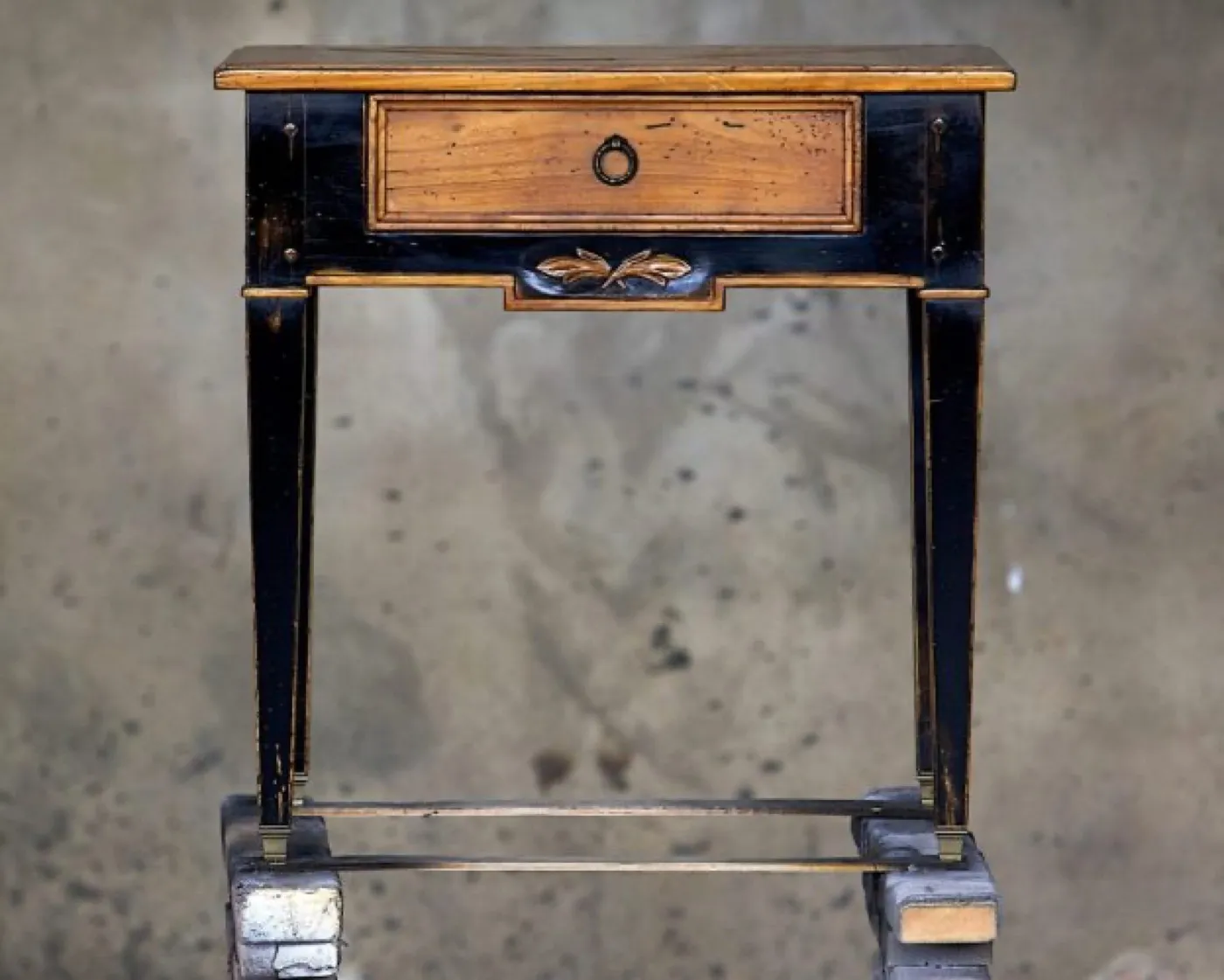
The Directoire is a transitional style between Louis XVI and Empire. Neoclassicism reigns, and the return to antique devices affects not only furniture but painting, architecture and sculpture. The style is marked by strict lines and avoids excess. Marquetry is plentiful, sometimes replaced by inlays of bronze, copper and pale woods, or by bold carved motifs. Mahogany is very popular. Two tendencies emerge: one looks to Ancient Rome (curule chairs appear and chair legs take a sabre shape), the other to Egypt (winged sphinxes and heads in characteristic headdresses become favourite motifs). Greek geometric ornament remains in favour, appearing at the centre of panels as a motif in its own right or as a frame. The antique ornaments are strikingly theatrical: legs shaped as caryatids, winged griffins and sphinxes. Curiously, motifs reflecting the politics of the time are rare: only occasionally do flags, Phrygian caps and patriotic slogans appear.
VI
Empire
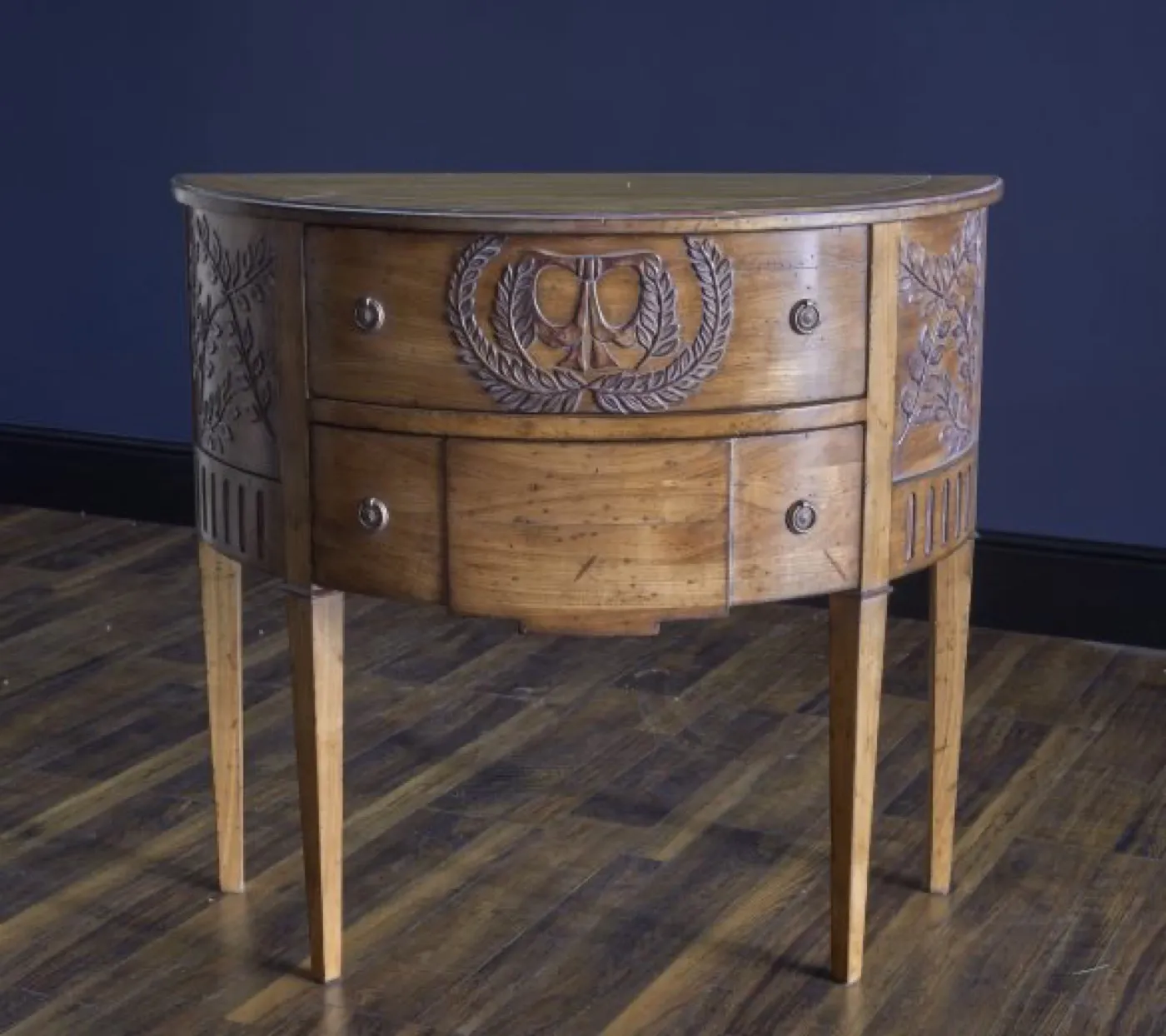
Empire furniture is built on precise schemes dominated by straight lines, and the rectangle defines its forms. Flat surfaces are decorated at the centre with bronze mounts. Mouldings disappear and edging is no longer used; the beauty of the wood itself is considered enough. Cabinetmakers no longer use marquetry to enliven the decoration. Bronze, by contrast, sets off the dark wood and heightens its warmth. Round and half-round columns, caryatids and sculpted supports (heads of lions, sphinxes, winged figures, rams’ heads, griffins) give the furniture the character of a considered architectural ensemble. The principal ornaments are laurel leaves, vine branches, ferns, stars and eagles, along with anything that evokes greatness and power, Napoleon’s included. Sometimes slightly heavy, Empire furniture is remarkable for the quality of its execution and the perfection of its finish. The small pieces popular in the eighteenth century vanish, giving way to large, stately furniture integrated with the fixed architecture around it. The interior is arranged to create balance and stability; strict symmetry is observed, nothing moves and the furniture stays in place.